
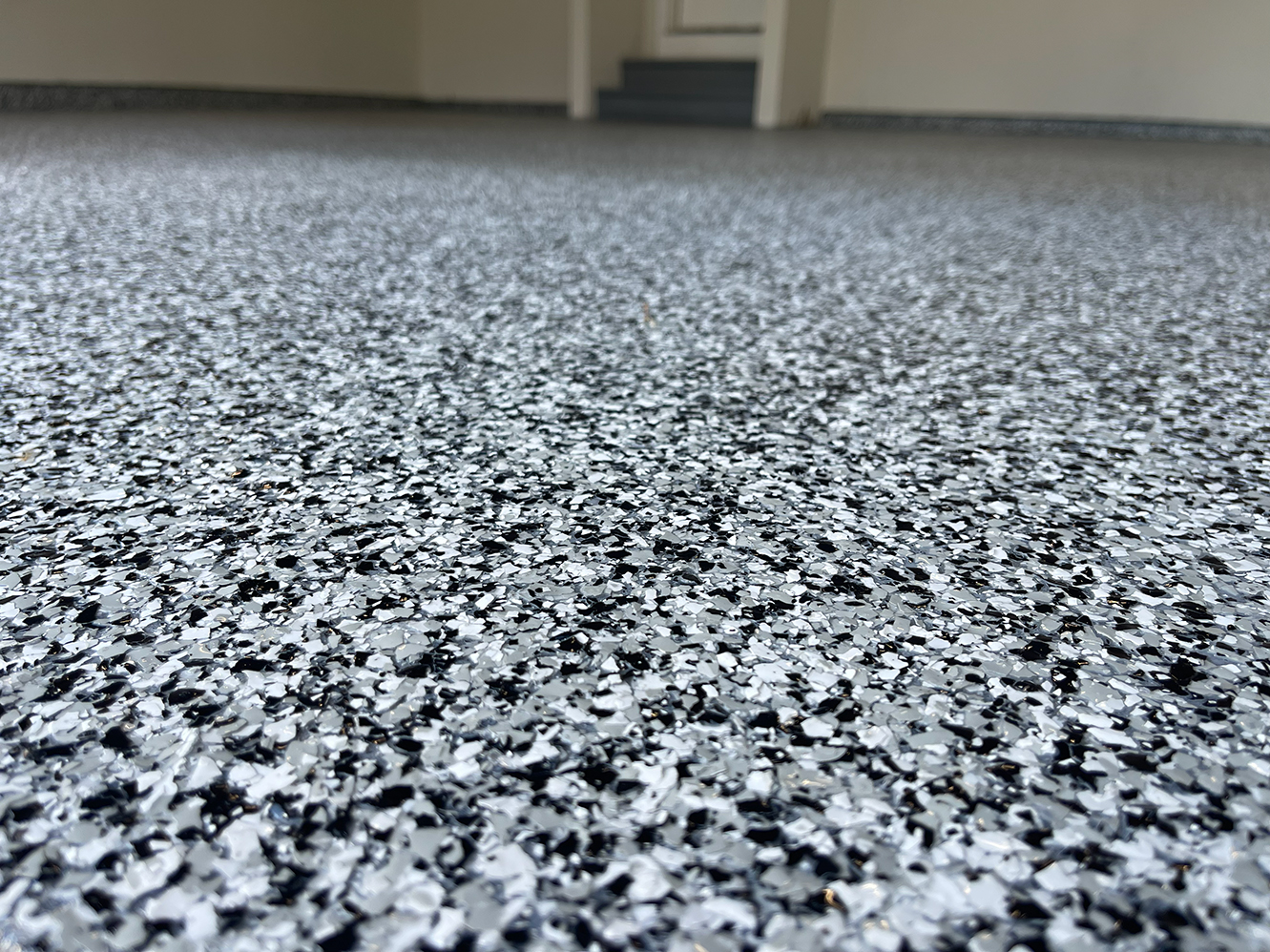
What Polyurea Actually Is
Polyurea is a two-component elastomeric resin — a chemical cousin of polyurethane, but faster-curing and more chemically stable. Polyaspartic is a slower-curing variant of polyurea engineered specifically for floor coatings. Both are dramatically more UV-stable, flexible, and abrasion-resistant than traditional epoxy. In a modern garage floor system, polyurea/polyaspartic is used as the topcoat over an epoxy or polyurea base.
Polyurea vs Epoxy — Side by Side
| Property | Traditional Epoxy | Polyurea / Polyaspartic |
|---|---|---|
| Cure time (foot traffic) | 16–24 hours | 4–6 hours |
| Total project time | 3–5 days | 1 day |
| UV stability | Yellows and chalks | Crystal clear, will not yellow |
| Flexibility | Rigid — can crack on slab movement | Elastomeric — absorbs impact |
| Chemical resistance | Good against oil and fuel | Excellent against oil, fuel, salt, brake fluid |
| Temperature range for install | 55–90°F | 0–110°F |
| Abrasion resistance (Taber) | ~120 mg loss | ~18 mg loss (4× stronger) |
| Lifespan (residential) | 5–10 years | 15–20+ years |
| Cost (topcoat only) | Lower | 20–40% higher |
Where Polyurea Wins in Atlanta Garages
Hot-tire pickup resistance
Atlanta summers push garage floor temps past 120°F. Epoxy softens and lifts under hot tires; polyurea stays hard.
Humidity and pollen tolerance
Polyurea cures reliably in Georgia's summer humidity where epoxy can blush or delaminate.
Year-round install
We install polyurea/polyaspartic systems every month of the year — including January and February — where straight epoxy would fail to cure.
1-day turnaround
Drop the car off Monday morning, park on it Tuesday. Straight epoxy jobs take most of the week.
UV stability at open garage doors
Any sunlight exposure yellows epoxy within 12–18 months. Polyurea stays crystal clear.
Where Epoxy Still Makes Sense
As the base coat
A pigmented epoxy base broadcast with flake is still the industry-best foundation — then sealed with polyurea.
Interior warehouses with no UV
If sunlight never hits the floor, epoxy's yellowing problem disappears and the cost savings can matter.
Thick self-leveling pours
Epoxy can be built up to 20+ mils for coving or self-leveling repairs; polyurea is a thin-film topcoat.
How Ice Coat Epoxy Builds a Hybrid System
Every Ice Coat Epoxy residential floor uses diamond-ground concrete prep, a pigmented epoxy or polyurea base coat, a full flake broadcast, and two coats of 100% UV-stable polyaspartic. You get the build and adhesion of epoxy where it matters, and the toughness, clarity, and longevity of polyurea on top. That's why we can back every garage with a 10-year warranty and why our floors are performing 4× better than straight epoxy on the abrasion test.