
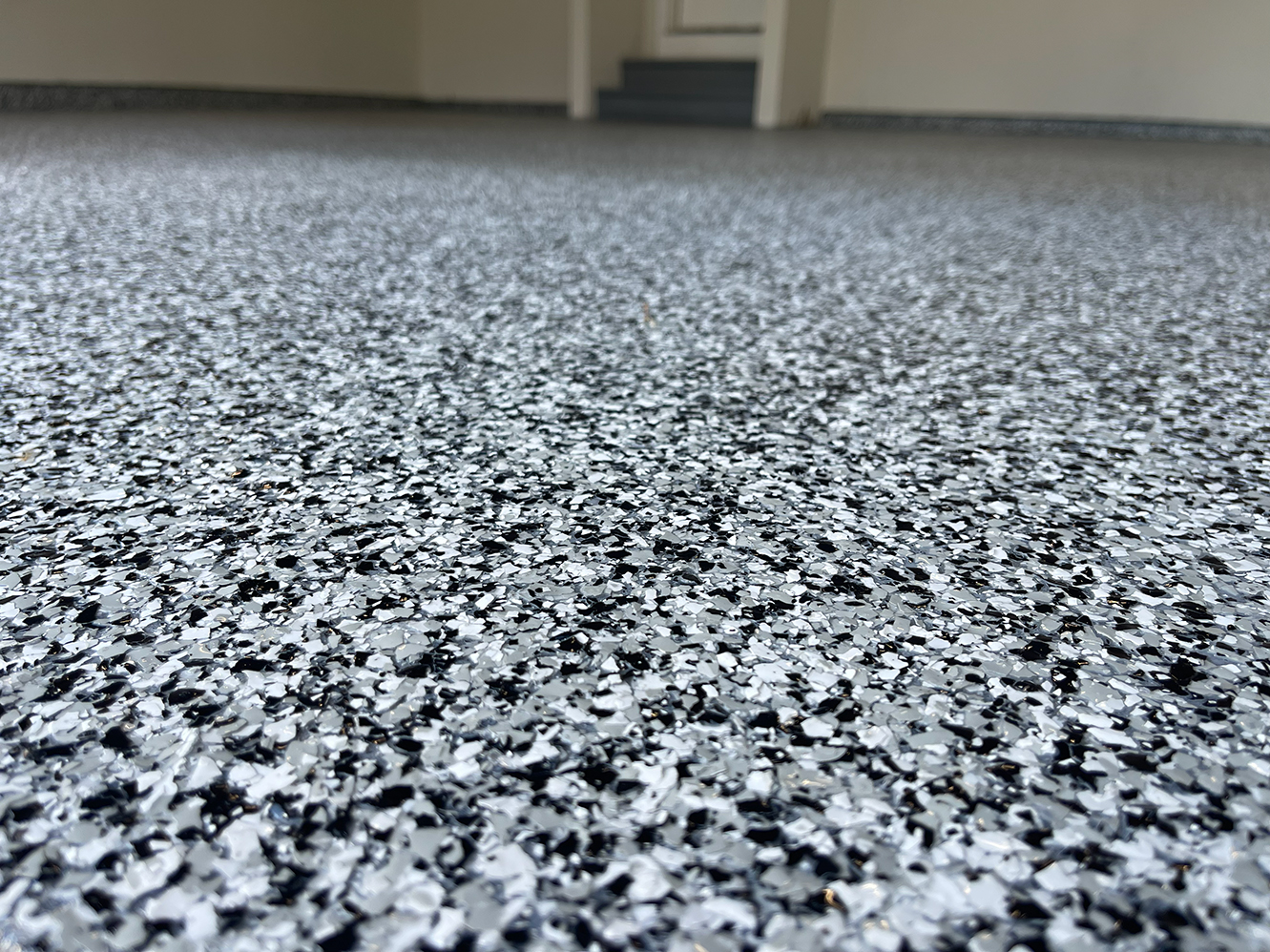
The Short Version
Garage floor paint is a 1-part latex or oil coating designed for foot traffic. Professional epoxy is a 2-part thermoset resin that chemically bonds to diamond-ground concrete. They aren't the same product, they aren't applied the same way, and they don't last anywhere near the same amount of time.
In the Atlanta metro — where slabs sweat from humidity, summer surface temps clear 110°F, and hot tires sit on concrete for hours — paint usually fails within 6–12 months. A properly installed epoxy/polyaspartic system lasts 15–20+ years.
Side-by-Side Comparison
| Property | DIY Garage Floor Paint | Pro Epoxy + Polyaspartic |
|---|---|---|
| Material type | 1-part latex/oil acrylic | 2-part thermoset resin |
| Concrete prep | Acid etch or none | Diamond grind to CSP-2/3 profile |
| Bond mechanism | Surface adhesion only | Mechanical + chemical bond |
| Film thickness | 3–5 mils | 20–40 mils (8–10x thicker) |
| Hot tire pickup | Fails within months | Will not lift |
| UV stability | Yellows and chalks | Crystal-clear polyaspartic topcoat |
| Chemical resistance | Poor (oil, gas, brake fluid) | Excellent |
| Typical lifespan in GA | 6–18 months | 15–20+ years |
| Cost per sq ft | $0.50–$1.00 (DIY) | $7–$12 (installed) |
| Warranty | None | Lifetime (Ice Coat Epoxy) |
Why Garage Floor Paint Fails In Atlanta
We get called to recoat failed DIY paint jobs almost every week. The failure modes are predictable.
Inadequate prep
Acid etching cannot remove the laitance layer or open the concrete pores deep enough for a permanent bond. Diamond grinding is the only method that creates the CSP profile epoxy requires.
Humidity blistering
Atlanta slabs constantly wick moisture vapor. A 3-mil paint film traps that vapor and bubbles. A 20+ mil epoxy system with a moisture-tolerant primer handles it.
Hot tire pickup
Tires heat up to 140°F+ on summer drives, then cool against the floor. Soft latex paint sticks to the tire and peels off the slab — the #1 DIY failure we see.
UV degradation
Sunlight through the garage door yellows and chalks paint within one season. A polyaspartic topcoat is aliphatic and UV-stable.
Chemical exposure
Brake fluid, gasoline, antifreeze, and battery acid eat through floor paint. Cured epoxy resists all of them.
What Diamond Grinding Actually Does
Professional installers run a 200+ lb planetary grinder with industrial diamond tooling across every square foot of the slab. This removes existing sealers, paints, and the weak laitance layer on top of the concrete, then opens the pores so the epoxy primer can mechanically lock into the substrate. Without this step, no coating — epoxy, polyaspartic, or otherwise — will last. Garage floor paint cans tell you to acid etch instead. Acid etching is a small fraction as effective and is the reason most DIY jobs peel.
When DIY Paint Might Make Sense
If you're renting, planning to sell within 12 months, or just want a temporary cosmetic refresh on a rarely-used slab, a $40 bucket of garage floor paint can buy you a year of better appearance. For anything you actually park on, store on, or want to last — it's not the right product.
The Honest Cost Comparison
DIY paint runs $0.50–$1.00/sq ft in materials and gives you 6–18 months. Recoating every year costs more in the long run than installing one professional system. A 500 sq ft 2-car garage in pro epoxy/polyaspartic runs $3,500–$6,000 installed with a lifetime warranty — that's $175–$300 per year amortized over 20 years, less than the cost of repainting a paint job annually.
Next Steps
- Our Flake Epoxy System
The 2-day system most Atlanta homeowners choose.
- 1-Day Polyaspartic
Fastest install — back to parking the next day.
- Cost Guide
Real Atlanta pricing for every system.
- Get a Free Quote
Same-day quotes across the Atlanta metro.